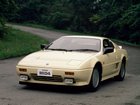
Their advanced technologies, however, were integrated into iconic production models like the Nissan 300ZX (Z32) and the R32 Skyline GT-R.
Nissan MID4 (1985)
Unveiled at the 1985 Frankfurt Motor Show, the first MID4 was an experimental car combining a mid-engine layout with a four-wheel-drive system.
* **Engine:** It featured a naturally aspirated **3.0-liter VG30DE V6** engine with dual overhead camshafts, producing around 230-245 hp. The engine was mounted transversely.
* **Drivetrain:** The innovative full-time 4WD system, a predecessor to the later ATTESA system, sent 33% of power to the front wheels and 67% to the rear.
* **Technology:** It was the first car to feature Nissan’s HICAS (High Capacity Actively Controlled Steering) four-wheel steering system, which improved stability and handling.
* **Design:** It had a sharp, wedge-shaped body made of fiberglass with pop-up headlights and side air intakes, in a style comparable to contemporary European sports cars like the Ferrari 308/328.
Nissan MID4-II (1987)
The MID4-II, which debuted at the 1987 Tokyo Motor Show, was a more refined, virtually production-ready evolution of the original, with several significant upgrades.
* **Engine:** The engine was upgraded to the twin-turbocharged and intercooled **3.0-liter VG30DETT V6**, which produced a potent **330 hp** (330 PS) and 285 lb-ft of torque.
* **Drivetrain:** Due to the increased power and transmission requirements, the engine orientation was changed to a longitudinal mounting. It retained the AWD and HICAS four-wheel steering systems, which were further improved.
* **Suspension:** It featured a sophisticated suspension setup with double wishbones at the front and a multi-link arrangement at the rear.
* **Design:** The bodywork was completely restyled, adopting a smoother, more rounded, and elegant design that some noted resembled the later Honda NSX. It was slightly larger and heavier than its predecessor.
* **Outcome:** Despite being close to production, the project was canceled due to the prohibitively high production costs and the onset of the Japanese economic downturn.
The Nissan MID4 and MID4-II were mid-engine, all-wheel-drive concept cars from the 1980s that were developed to rival European supercars but never reached mass production due to high costs.