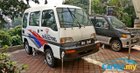
Simply dubbed the E-Van, it was based on the Subaru Domingo, which was used by TNB in its fleet. The 1.2-litre 3-pot engine in the rear was swapped out for an electric motor. The rear-mounted motor is then charged up by a series of lead-acid batteries placed in the middle of the van . Only 3 units were produced.
The conversion kit was reportedly supplied by IVO, an energy supplier from Finland. Reports at the time also claimed the E-Van had a maximum range of 200 km, a top speed of 100 km/h, and a charging time of 6 hours via a conventional three-pin power outlet. It was paired with a 5- speed manual transmission.
The only other addition placed in the electric van is a gauge in the middle of the dashboard that measures the range and power delivery of the motor.
In the 1990s, Tenaga Nasional Berhad (TNB) developed a prototype electric van (e-van) based on the Subaru Domingo, marking Malaysia’s first proposed battery electric vehicle (BEV). While the project did not reach mass production, it laid the groundwork for TNB’s modern electrification initiatives.